Friday, August 27, 2010

Report from the Scott River – Chinook Salmon and Property Rights Fanatics are doing well this year!

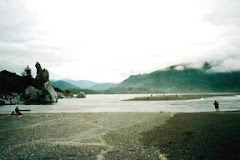
Last week KlamBlog was on the Scott River checking out conditions in the river and investigating what is being done to clean-up the Scott now that we have water quality clean-up plans adopted for that river as well as the Shasta and Klamath Rivers. For those who may not know, the Scott is major Klamath River tributary.


Along with the nearby Shasta River, Scott River both produced the bulk of Klamath River Chinook and Coho Salmon and Pacific Lamprey as recently as the 1960s. While they continue to produce most of the Klamath River's wild Chinook Salmon, Chinook production is a shadow of what it once was. Coho and Lamprey have declined precipitously in the two sub-basins to the point that they are now considered to be at high risk of extinction/extirpation.

The culprits in the decline of Scott River Salmon and Lamprey are well known through more than 30 years of study and assessment. Excessive nutrient loading (almost all from livestock and return irrigation flows), lethally high water temperature and especially the dewatering of large amounts of Salmon and Lamprey habitat are driving these fish to extinction/extirpation.

Poor water quality and severely reduced flows from the Scott and Shasta Rivers have also played a major role in promoting epidemic levels of fish disease in the Klamath River proper. Data from out-migrant fish traps indicates that many of the salmon produced in the Klamath River Basin die from these fish diseases before they can reach the Pacific Ocean. Mortality happens every year but increases in dryer years when flows from the Scott and Shasta Rivers approach zero. In those years virtually all the cold, clean water produced in national forest wilderness areas above these valleys is diverted, pumped and consumed by irrigation interests.    

To summarize, the progressive extirpation of Coho Salmon, Spring Chinook Salmon and Pacific Lamprey are well documented. The extinction process is in an advanced stage – especially on the Scott and Shasta Rivers. Unfortunately, we as a society appear to lack the will to reverse the slide toward extinction. Instead we watch it happen like voyeurs at a pornographic movie.

That is the background.....now for the good news:

This year, as a result of heavy snowpack and unusual late spring storms, fish habitat in the Scott River Canyon (lower third of the sub-basin) is in the best condition we’ve seen over the past 30 years. We dove at Gold Flat and near Kelsey and Canyon Creeks. The flows are good, water temperature is low and there are lots of juvenile salmon and steelhead present and well distributed. As a consequence, the Scott River Canyon will produce a large number of Salmon this year. Because water quality is also relatively good  in the Klamath River as well, disease rates should be lower and many of the young salmon rearing in the Scott should make it to the Pacific Ocean.

Unfortunately the good flows and water quality in Scott River Canyon do not extend to the agricultural valley that occupies the middle third of the Scott River Basin. In spite of the fact that there was still snow pack in the mountains and lots of high quality water being delivered to Scott Valley from the national forest wilderness areas above, flows out of the Scott Valley are low. Flow readings at the US Geological Service’s gauge below Scott Valley showed flows of about 30 cubic feet per second last week. That is about half the 68 year average flows for this time of year.

While 30 CFS is a fraction of what would be flowing in the Scott if groundwater pumping had not doubled since the 1960s, KlamBlog estimates that the flows observed at the gauge are actually closer to 10 cfs than to the 30 CFS reported by USGS. The discrepancy is likely the result of failure by the responsible government agency to recalibrate the gauge after large winter and spring storms significantly shifted the bed of Scott River. KlamBlog has alerted the USGS to the problem but the "near real-time" readings for the Scott River continue to show an erroneous 30 CFS.   

Most of the Scott River Basin habitat for juvenile Lamprey is in the low gradient portions of the river that occur in and just below Scott Valley. But most streams in the Valley are once again completely dry this summer. Younger folks living in the Valley have come to think of this dewatered condition as normal. But the old timers know that this is not the way it was. It is also not the way it would be now if applicable laws were enforced and water was managed responsibly.

Lamprey juveniles spend up to 7 years in river bottom sediments. When these streambeds are dewatered by excessive irrigation pumping and stream diversion, the young Lamprey are wiped out. Some fisheries biologists believe that, among all the Klamath’s anadromous fish, Klamath Lamprey are at highest risk of extinction. The primary cause is dewatering of their Scott River Valley juvenile habitat as a result of unregulated irrigation withdrawal.

The demise of the Lamprey has real world consequences. In the not-to-distant days when the Scott River had good flows during June, Native folks living in the Scott River Basin would go down to the riffles with a sock on one hand and a burlap sack in the other hand. They would pick up migrating lamprey with the socked hand and put them into the burlap sack. Lamprey once provided a high protein food source for Native people throughout the Klamath River Basin.


When KlamBlog was in the Scott Valley last week the center pivot irrigation systems which have sprouted around the Valley in recent years were in full operation in the middle of the day. Air temperature was about 100 degrees. Because they are rated by engineers as more efficient as compared to wheel line and flood irrigation, irrigation interests maintain that these center pivot systems use less water to irrigate the same amount of crop or forage land. In 2002 that reasoning persuaded Congress to provide $50 million dollars from taxpayers to buy and install these more efficient irrigation systems for Ag folks in the Klamath River Basin. The promise was that this would mean more water for fish.

But the increased flows never materialized. We wonder whether the center pivot systems - which put out a fine mist rather than a spray of water drops - save water when they are run in the middle of a hot, summer day. Does enhanced evaporation wipe out the water savings? KlamBlog has sent the Natural Resource Conservation Service a query on the question and will report if they respond. You can contact them too; here’s contact information for Yreka NRCS office chief Jim Patterson:
               215 Executive Court, Suite A, Yreka, CA 96097 
               james.patterson@ca.usda.gov, (530) 842-6123

One of our questions for NRCS is why - in exchange for government funding for center pivots - those receiving them were not required to agree to irrigate only during the evening and nighttime hours. We suspect that just that simple change in irrigation practices would cut irrigation water use significantly and consequently keep more water in the Scott River.


Government Funded Water Waste in the Scott River Valley

Irrigating in the middle of hot summer days is only one aspect of government funded water waste in the Scott River Valley. But several organizations are hard at work trying to persuade the public that the irrigators who dewater the river and irrigate in the middle of very hot summer days really care about salmon. The Scott River Water Trust is one such organization. It has issued press releases claiming that Scott River irrigators are working hard to provide for Scott River Salmon.

But if these irrigators really care about fish why don’t they wait until the cool of evening to turn on their irrigation pumps? How much water could be saved for fish and flows if this simple practice were followed? Instead the Scott Valley Water Trust pays irrigation interests for the water it puts into Scott River Basin streams. Is irrigator concern for fish in the Scott River Valley just a matter of money? Those middle of the day misters unnecessarily evaporating precious water provides the real answer.

KlamBlog also believe it is bad policy and unfair to taxpayers to pay for water to which the fish have a first right under the Public Trust Doctrine and California Water Law. The approach of the Scott River Water Trust -leasing water to provide minimum or marginally better conditions for salmon - undermines the Public Trust Doctrine.

According to the Water Trust's web site, the Scott River Watershed Council (SRWC) is one of the Trusts two “partners”.  In a recent commentary by Council Chairperson Marilyn Seward,  published in the Scott Valley View (the Siskiyou Daily News’ new weekly publication), the Council disclosed its core purpose and function: Here’s part of what Seward wrote about the SRWC:

          The most recent project has involved laying the groundwork for the creation of a Scott Valley Groundwater Advisory Committee, which would work with the Siskiyou County Board of Supervisors (in an advisory capacity only) to create a plan which would continue to keep groundwater protection and management under county jurisdiction..……In recent years, several hard-working local groups and the farmers/ranchers themselves have been criticized by state and federal agencies because they “aren’t doing anything.” The Strategic Action Plan tells a different story, but it has become obvious that this information isn’t being disseminated to these critical groups, to county/state/federal groups who partner with Scott Valley ranchers in dozens of conservation/restoration projects, even to Scott Valley citizens themselves. A chief objective of the Scott River Watershed Council will be to rectify this oversight.

In other words, the newly reorganized Scott River Watershed Council’s function will be to promote the fiction that it is OK for Scott Valley irrigation interests to progressively dewater the Scott River thereby driving Coho Salmon and Pacific Lamprey to extinction in the watershed because these folks are taking federal money to do feel-good projects which benefit them more than they benefit fish. Good luck Marilyn - convincing folks that fish can do fine without water or a living river is going to be a hard sell!

In recent decades, Watershed Councils have been formed by diverse stakeholders to help salmon and steelhead survive by cleaning-up pollution and restoring adequate flows. The Scott River Watershed Council is a different animal entirely. By public admission of its chairperson, its mission is “local control”. Like the Water Trust's other "partner" - Siskiyou Resource Conservation District - the Scott River Watershed Council’s function is to keep taxpayer funds flowing to farmers and ranchers while obscuring the fact that these same farmers and ranchers are driving Coho Salmon and Pacific Lamprey to extinction in the sub-basin. 

The reorganization of the Scott River Watershed Council so that it is a more effective propaganda tool for irrigation interests is part of a drive by Siskiyou County property rights fanatics – led by the Siskiyou County Board of Supervisors – to gear up for what they are projecting as a new “water war” focused on groundwater. Siskiyou County’s water war hysteria is in large part a response to a lawsuit filed by the Environmental Law Foundation and Pacific Coast Federation of Fishermen’s Associations (PCFFA) challenging groundwater exploitation in the Scott River Valley. But that lawsuit could take 30 years to complete. Water war hysteria may be more geared to securing funds from right wing foundations than a genuine need to counter an immanent threat of water reallocation.

And, as if it does not already have a sufficient number of organizations ranting about property rights, Siskiyou County has spawned yet another. Scott Valley Protect Our Water – or “POW” is conducting a “Restore Honor Water Rally” at the Siskiyou Fairgrounds on August 28th. There will likely to be plenty of out-of-county lawyers and consultants attending; it will be interesting to see how many Siskiyou citizens show up.

POW joins SOSS, the Siskiyou Farm Bureau, Siskiyou RCD, the Scott Valley Watershed Council as organization whose self-appointed mission is to prevent enforcement within the county of those provisions of the California Constitution which are supposed to guarantee fish the water they need to survive and to assure that the public interest in water is not infringed in the course of meeting private needs. It appears that Siskiyou County’s property rights fanatics each need their own organization!  They must all be leaders and probably desperate for a few followers.

POW is also taking credit for placing “dam removal” on the November ballot in Siskiyou County. KlamBlog suspects the property rights fanatics may be surprised when those votes are counted.

The recognition that those who embrace “restoration” in the Scott River Basin are ripping off the taxpayers for private benefit while driving the very species they are being funded to restore to extinction has finally begun to sink in with those downstream as well as with those who control restoration funding purse strings. It is just a shame that it has taken so many agency and elected officials 30 years to realize what is really going on up on the Scott. Let's hope that recognition, while belated, has come in time to prevent Coho Salmon and Pacific Lamprey from being driven to extinction in the Scott River Basin.

Federal and state agencies which continue to fund these cynical and wasteful operations should be taken to task. If we are going to prevent the looming extinction of Klamath Coho and Lamprey we can’t afford to waste more scarce restoration funds on efforts which on balance hurt the very species they are intended to restore.    

Saturday, August 14, 2010

No Klamath Legislation This Year!

KlamBlog has learned that prospects are slim to none that legislation will be introduced this Congress to authorize and implement aspects of the Klamath Hydroelectric Settlement Agreement (KHSA) and Klamath Basin Restoration Agreement (KBRA) – the Klamath Dam and Water Deals. It appears that members of Congress from Oregon and California who are involved in things Klamath or who represent portions of the Klamath River Basin can not agree on what such legislation would and would not contain

That should come as no surprise. Once proclaimed a comprehensive solution to the Basin’s water conflicts based on solid science and supported by the vast majority of interests, the Dam and Water Deals have proven to be none of what was claimed. The Deals’ promoters – who just happen to be the entities which would gain from them at the expense of other interests and the American Taxpayer – claimed that the whole package was necessary in order to get the dams down. But just like the California Water Bond that has now been pulled, federal legislation is not needed to remove PacifiCorp’s Klamath River Dams. A process for doing that already exists and has been used many times in the past to remove aging and environmentally destructive dams.

The dams will come down because it is in the interest of PacifiCorp – and its Berkshire-Hathaway shareholders – that they come down. Legislation is only needed for certain interests to get the large payoffs, water and land allocations and releases from liability which promoters of the Deals still hope to tie to the dam removal train.

PacifiCorp, however, has Warren Buffed and that brings with it a lot of political juice. That means, that while legislation to ratify the complex, controversial and costly KBRA may never see the light of day, we may yet see legislation to give PacifiCorp what it wants most, that is, release of liability not only for dam removal but also for toxic legacies that may be lurking in or near PacifiCorp’s aging powerhouses. If PacifiCorp has its way liability for those toxic legacies will be shifted to the American Taxpayer.

While legislation appears unlikely this year, much of what is in the KHSA and KBRA do not require legislation. Those portions are already being implemented by federal and state agencies. Restoration doesn't require legislation either. Water qualities clean up plans are in place for the Klamath and key tributaries including the Shasta and Scott. All that is needed now is for the responsible agencies to step up and actually enforce provisions of the clean-up plans. The agencies also already have salmon, water quality and other restoration funds. Funding for unmet restoration needs can be sought through federal and state budget and appropriation processes as was done recently to provide funding for Klamath fish disease studies.

Water management is a different matter: In the absence of legislation water management will remain fragmented and fraught with conflict. It is clear, however, that many Basin citizens, governments and interest groups reject the undemocratic back room water management proposed in the KBRA.

Klamath River Activist and KlamBlog’s principle author, Felice Pace, has proposes a different approach. In an opinion published Wednesday in the Siskiyou Daily News, True-leadership-seeks-justice-fairness  Pace rejected both the KBRA and Siskiyou County’s local control fantasies. Rather than legislating the complex KBRA which seeks to lock in and micromanage the Basin’s water future, Pace suggests establishing a process for coordinating water management and restoration under existing authorities and in full public view.

A new Klamath River Compact and Compact Commission with seats for tribes and counties as well as states and the federal government would avoid legislating complex technical issues. It would also sidestep the KBRA proposal to lock in flows and water allocations based on scientific studies which have been criticized by the National Research Council (NRC). Independent NRC scientists stated that flow studies done to date treat the Klamath River as if it were “the Upper Basin and a gutter to the sea.” As KlamBlog previously pointed out, the decision to exclude from flow studies tributaries with major water diversions – the Shasta, Scott and Trinity -  was wholly political. The California Department of Fish and Game insisted that a federally supervised flow study NOT address the Shasta and Scott which the Department thinks is its exclusive “turf”.

While Klamath Legislation appears dead this year it would be foolish to believe it could not rise again. Attempts to tie the KBRA’s generous subsidies to dam removal will not end.. Irrigators who get Klamath River water courtesy of the Bureau of Reclamation’s Klamath Project are rich, powerful and well connected. They are also the ones who stand to gain most financially and politically if they can tie KBRA funding, public land mandates and water allocations to dam removal.

Because they have so much to gain, the irrigation elite will not give up. They and their lobbyists will be looking for ways to get from Congress and the American Taxpayer the subsidies and other benefits they negotiated behind closed doors. 

Stay tuned.

Monday, July 26, 2010

Klamath Confusion: Are Interior and Cal Fish & Game on the same page?

The California Department of Fish & Game and the US Department of Interior are working together to produce an environmental impact report and statement in support of a determination by the Secretary of the Interior on what to do with PacifiCorp’s five hydroelectric dams located on the mainstem of the Klamath River. It is widely believed that Secretary Salazar will decide to remove four of the five dams and transfer a fifth dam and reservoir - Keno - to the US Bureau of Reclamation. Close examination of the official purpose for the environmental review is crystal clear: the review is narrowly focused on whether removal of four dams is in the public interest and will advance restoration of Klamath River Salmon. It must also address what to do about the fifth PacifiCorp dam and reservoir – Keno.

But information provided to the public at scoping meetings - and contained on the federal government web site created for the environmental review - gives the distinct impression that the environmental review will not be limited to the fate of the dams – nor even only to the whole Klamath Hydroelectric Settlement Agreement (KHSA) – but will also analyze the costly and controversial Klamath Basin Restoration Agreement (KBRA). For example, the PowerPoint Presentation found on the web site and used at scoping meetings states that the purpose of the meetings is to:
             Provide you information about the environmental review process for the two connected  Klamath Agreements (KHSA and KBRA) and how you can be involved and informed.

Have NEPA and CEQA already been violated?

The National Environmental Policy Act (NEPA) and the California Environmental Quality Act (CEQA) each require that the impacts of a proposed action which could significantly affect the natural and human environment must be analyzed and the impacts disclosed. Other actions which are materially connected to the proposed action must also be analyzed and disclosed.

There are connections between the KHSA (Dam Deal) and the KBRA (Water Deal). The connections, however, are mainly political rather than material. The one substantive issue where there is a connection is Keno Dam and Reservoir. PacifiCorp owns Keno but the Bureau of Reclamation and its water users want the dam and reservoir to stay in place. Keno Reservoir currently has the worst water quality in the entire Klamath River Basin; it kills fish every year. That water quality and Keno Dam are major barriers to the restoration of Klamath Salmon. Both the KHSA and KBRA will impact Keno and its future management and that future management must be addressed in the EIR/EIS. Most of the other issues and decisions in the KBRA, however, are not materially related to the fate of PacifiCorp’s dams.

By providing conflicting information on the scope of the environmental review being undertaken, it is likely that the Department of Interior and Cal Fish & Game have already violated the National Environmental Policy Act (NEPA) and the California Environmental Policy Act (CEQA). While the official statements of purpose are narrowly limited to consideration of dam removal and “connected actions”, the interaction of the agencies with the public has given the impression that the entire KHSA and the entire KBRA are up for review. Statements made by the public at scoping meetings consequently reflect confusion about whether the environmental review is just about dam removal or whether it is about the full scope of the KHSA and KBRA. Interior and Cal Fish and Game are responsible for this confusion.

Why this is important

Dam removal on the Klamath River has many supporters but also significant opponents. It can be confidently assumed that opponents will use any means at their disposal – including lawsuits – to block dam removal. By muddying the NEPA/CEQA waters with conflicting and confusing information, Interior and Cal Fish and Game have handed opponents of dam removal the means to frustrate – or at minimum significantly delay - removal efforts. The KBRA is a heavy anchor that may yet sink dam removal.

If KlamBlog wanted to block dam removal we would now just sit on our hands until the EIR/EIS is complete and then we would challenge the process in court as fatally corrupted because the responsible agencies provided the public with confusing information about the scope of the environmental review.

Opponents of dam removal include groups and governments with close ties to the Pacific Legal Foundation. Lawyer there must be licking their chops at prospects for blocking dam removal using NEPA and CEQA. Responsible federal and state officials have already given them a winning case on a silver platter.

Will they fix it?

What needs to happen now is for the federal Department of Interior and California Department of Fish & Game to decide what this environmental review is really about. If federal and state officials are serious about implementing dam removal they must narrow the focus of the EIS/EIR to the purpose stated in the Federal Register Notice and NOP. This means only considering KBRA impacts where they have a material connection to that EIR/EIS purpose.

Interior and Cal Fish & Game must restart the environmental review process and clearly tell the public what the review is about….as well as what it is not about. If they choose not to restart the process, KlamBlog predicts a successful legal challenge down the line.   
 
Should the KBRA be considered?

Mangers could choose to analyze the myriad of complex issues and impacts likely if the long, complex and scientifically-controversial KBRA is adopted and implemented. Such an EIS/EIR would likely also provide opponents of dam removal with opportunities to successfully block not only KBRA implementation but also dam removal. That’s the case because the KBRA ignores the best available science on the river flows it seeks to lock in. Recommendations of the second Klamath Report by the National Research Council - Hydrology, Ecology, and Fishes of the Klamath River Basin - are even omitted from the official government web site’s Bibliography of (Klamath) Science Studies.

The KBRA is a legal and political anchor capable of bringing down the KHSA and frustrating the hopes of those who want to restore the Klamath River and its fisheries.

An invitation


Is the EIR/EIS and the decision to be made what to do with PacifiCorp’s Klamath Dams or is it about whether or not to adopt and implement the costly and controversial KBRA? The Department of Interior and Cal Fish & Game appear confused themselves as to the answer. We invite both government agencies to clarify the question on this blog.

Sunday, July 11, 2010

Yurok Tribe funded to help Cal Fish & Game get it right!

KlamBlog has learned that the US Fish and Wildlife Service has awarded Yurok Tribe $25,000 to “provide assistance to the California Department of Fish and Game (CDFG) for the development of an adequate Environmental Impact Report for the analysis of the Klamath Basin Restoration Agreement (KBRA) and Klamath Hydroelectric Settlement Agreement (KHSA) in support of the Secretarial Determination called for in the KHSA.”
The discretionary, non-competitive grant was awarded at the end of June and will allow senior fisheries biologist Mike Belchik and other Yurok staff to review and comment on all draft documents produced by the contractors hired to write the environmental report and conduct related studies. The grant announcement directs the tribe’s staff to “focus their efforts on assuring accuracy of the technical elements of the environmental documents.”

Curiously, the Yurok Tribe’s tasks as defined in the grant announcement put more emphasis on the Klamath Basin Restoration Agreement - the Water Deal – as compared to the Federal Register Notice of Intent (NOI) and accompanying Press Release issued jointly by Cal Fish & Game and the Department of Interior.

In the NOI  Interior and Cal Fish & Game define the scope of the EIS/EIR to include “the nature and extent to which the potential environmental impacts of implementing the Klamath Basin Restoration Agreement (KBRA) should be analyzed in this EIS/EIR.”  The Yurok Tribe’s grant announcement on the other hand seems to assume that the question of whether the KBRA is analyzed in the EIS/EIR has been settled!

The Dam and Water Deals are, of course, joined politically. But it is not clear that there is a significant nexus between the two that extends beyond politics. Environmental Impact Reports are supposed to be about environmentally related actions and impacts. That includes economic and social impacts but politics is supposed to be non germane. Furthermore, the KBRA is already being implemented by the federal agencies which are – contrary to what the press reported – the real driving force behind it and among those who gain the most through it.  

There is one place, however, where the KHSA and KBRA – the Dam and Water Deals - do potentially share environmental, economic and social impacts. That place is the former bed of Lower Klamath Lake - including Keno Dam and Reservoir and the Keno Reach of the Klamath River. Under the Dam Deal both Keno facilities are transferred from PacifiCorp to the US Bureau of Reclamation which will maintain them for the benefit of irrigators. That transfer could have significant environmental, economic and social impacts. Most importantly, it is not clear whether the KBRA will delay or even prevent effective clean up of Keno Reservoir which is regularly so choked with agricultural wastewater that fish kills occur. The quality of the water in Keno Reservoir is in turn likely the main stumbling block to restoration of salmon to the Upper Klamath River Basin if and when the dams are removed.  

More on that in a future post.

Now, however, we want to point out that the Yurok Tribe is not alone in receiving recent, non-competitive grants from the US Fish & Wildlife Service:
  • On July 5th the Klamath Tribes received a $25,000 discretionary, non-competitive grant to “assist with drafting of the EIS and EIR ethnographic sections pertaining to the Klamath Tribes” and to “review and comment on drafts of the EIS and EIR and studies used to prepare them, as appropriate.”  Here’s a link to the full announcement.
  • Back in May the Sacramento-based Water Education Foundation  received a $42,000 grant to develop “a comprehensive booklet in order to advance the public’s understanding of the various issues related to the Secretarial Determination (SD) on Klamath River dams. The educational poster map of the Klamath Basin will help give the public’s understanding of the various issues related to the SD on Klamath River dams. The poster map will help the public to foster a greater understanding of the complex water issues associated of the Klamath Basin. The map will be printed and distributed to the public and will be a major piece in the overall effort to ensure meaningful public involvement in the Secretarial Determination process, a top priority of Secretary Salazar.”  This grant was justified as non-competitive because the WEF “(1) understands and has pervious experience in writing about the Klamath Basin water issues and who is aware of the sensitivities and positions of the stakeholder parties in the Klamath Basin; (2) has a reputation and strong track record of developing nonpartisan education materials about complex Western water issues, and (3) is local to members of the Communications Team so frequent, in-person meetings can be arranged as this project carried out; and (4) has experience publishing education material for federal sector clients.”  Here is a link to the full announcement on the grants.gov web site.
By comparing the official federal grant numbers for the three awards summarized above, it appears that there have been 17 other non-competitive grants quietly awarded by the US Fish and Wildlife Service for tasks associated with the Secretarial Determination for PacifiCorp’s Klamath Dams. KlamBlog has requested information on those 17 other grants and will pass it along when it is received.