Friday, March 30, 2012

The Big Policy Picture: Is the KHSA a good model for other rivers with obsolete hydro dams?

Beginning early in the 20th century and continuing through the 1960s thousands of hydroelectric dams were constructed on hundreds of US rivers and streams. Now portions of that vast infrastructure are reaching the end of their useful livers and will be shut down; the dams will be breached, removed or left in place. Thus, over the next decade, the current dam removal trickle is likely to become a flood.
How the US deals with this vast undertaking has implications not only for the rivers and streams on which these projects are located but also for American Taxpayers.


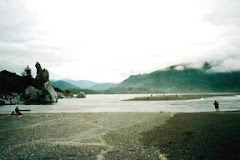
Removal of  Glines Canyon Dam on the Olympic Peninsula

Whether removing PacifiCorp's Klamath River dams is in the public interest continues to be publicly debated. However, broader policy implications of how Klamath dam removal would be accomplished under the Klamath Hydroelectric Settlement Agreement - the KHSA - have not been discussed.

Members of Congress and taxpaying citizens should consider what sort of precedent the KHSA would set and whether it is a good and a fair approach to dam removal not just on the Klamath but nation-wide.Those questions are discussed below.

Saturday, March 17, 2012

Underreported: PacifiCorp gets permit to kill Coho; the Klamath’s traditional “salmon defenders” are as silent as church mice

While press attention was focused on peer review of Interior’s “Overview Report” on effects of the KHSA and KBRA, one of the “promises” granted to PacifiCorp in the KHSA Dam Deal was quietly delivered in early March.

As promised in KHSA section 6.2.2, the National Marine Fisheries Service delivered a permit which will allows PacifiCorp’s Klamath River Dams to continue killing Coho Salmon with impunity in exchange for – you guessed it - money. The permit will remain in effect until PacifiCorp’s Klamath River dams come down – subject to another agency review in ten years.

How long will PacifiCorp's Klamath River Dams be allowed to continue to kill salmon?

Section 6.2.2 of the KHSA states:  
        The Services shall review PacifiCorp’s application to incorporate the Interim Conservation Plan measures into an incidental take permit pursuant to ESA  Section 10 and applicable implementing regulations” and that “each Party (signing the KHSA) shall support PacifiCorp’s request for a license amendment or incidental take permit to incorporate the Interim Conservation Plan measures.”

In other words, those former defenders of Klamath Salmon who signed the KHSA are now obligated to actively support issuance of the permit allowing PacifiCorp to kill Coho. Whether the new permit is actually in the interest of or detrimental to Klamath River Salmon is now irrelevant for those organizations and tribal governments. This is just one of several ways those signing the KHSA and KBRA have been co-opted and controlled.

At the current rate of progress - and if KHSA/KBRA promoters continue to stubbornly cling to their deal fantasies instead of returning to the normal FERC process – the ten year permit review is likely to come around with PacifiCorp’s salmon-killing dams still in place.

Monday, February 20, 2012

Truth and Illusion: Klamath Deal promoters misrepresent Klamath dam options

Promoters of the Klamath dam and water deals – the KHSA and the KBRA – have a new talking point. In recent guest editorials and news stories influenced by promoter organizations they are telling us that there are only two choices for PacifiCorp’s Klamath Hydroelectric Project. In the words of California Trout’s Curtis Knight:
           “There are two legal options for the dams: 1) fix them up and relicense them to modern standards at a cost exceeding $450 million, which is passed on to ratepayers; or 2) decommission and remove the dams under the Klamath Hydroelectric Settlement Agreement (KHSA) at a cost capped at $200 million to PacifiCorp and its ratepayers. Dam removal is cheaper. Much cheaper.”

It is true that the dams must either be relicensed to meet current requirements or they must be removed. It is not true, however, that there are only two options - relicensing under modern requirements or the KHSA/KBRA. A third option is to return to the Federal Energy Regulatory Commission (FERC) process where decommissioning and removal of the privately owned Klamath Hydroelectric Project will be accomplished via the process designed by Congress for that purpose.

Removing the dams via the normal FERC process would save taxpayers roughly three quarters of a billion dollars - the cost to taxpayers of the KBRA. The best and the least expensive course for ratepayers and taxpayers is to decide the fate of the dams within the normal FERC process – not via special interest KHSA- KBRA legislation introduced in Congress by Senator Merkley and Congressman Thompson.

PacifiCorp's Condit Dam in Washington State is being removed using the FERC process 

Saturday, January 21, 2012

KlamBlog Report: The Brave New World of Klamath Water and Endangered Species Management

The KlamBlog Report which follows was written by Felice Pace. It is not casual reading. In the report, Felice focuses on what he calls "the federal agenda" in the Klamath River Basin and the water deal that agenda spawned - the Klamath Basin Restoration Agreement or KBRA. Because the companion dam removal deal (the Klamath Hydroelectric Settlement Agreement) has captured so much public attention, the KBRA Water Deal has remained largely in the shadows - a status its architects likely intended. 

Felice argues that implications of the KBRA for the future of the Klamath River and Klamath Salmon may be far greater than the more popular Dam Deal. By insulating the federal Klamath Irrigation Project and the irrigation interests it serves from "calls" for leaving more water in the Klamath River, the KBRA will focus efforts to increase salmon flows on private irrigators in the Upper Basin, Shasta and Scott Rivers. This stark political development has not been appreciated by reporters covering Klamath Water issues nor apparently by local politicians.

 The romance of Salmon, Traditional Native People, Dam Removal and "Peace on the River" 
has captured the public imagination obscuring implications of the complex KBRA Water Deal  

Our report delves deep into the relationships from which the KBRA emerged: the relationship between the federal government and irrigators on federally developed and subsidized irrigation projects; and the realtionship between federal Indian tribes and federal government agencies.It places those relationships within broader national and west-wide contexts. KBRA-type water deals have been done or are being negotiated in western river basins from Arizona to Montana. Felice explains why these high stakes water deals are happening and speculates on how historians of the future might view them. 

The report also explores the sensitive subject of how federal funding within the Basin - and the dependence of tribes on federal funding - intersects with tribal reaction to federal water policy. Some tribes may not appreciate seeing details of  their federal funding dependence revealed in the report. This aspect is sure to stir up controversy and motivate comment. 

Using PCFFA's Glen Spain as a foible and the words of the Irrigation Elite as his illustration, Felice proceeds to describe how the KBRA will impact tribal water rights and the federal trust relationship with the Basin's six federal tribes. He points out that altering federal trusteeship responsibilities is one among several aspects of the KBRA which can only proceed if federal legislation to authorize and fund the Deal passes Congress and is signed into law. 

While some aspects await legislation, the report analyzes how the KBRA is already having a "corrupting influence" on how the Endangered Species Act is being implemented in the Klamath River Basin. Finally, Felice draws two lessons which he suggests can be learned from the report's facts and analysis. 

In The Brave New World of Klamath Water and Endangered Species Management long-time Klamath River activist Felice Pace looks deeply into the meaning and implications of the KBRA Water Deal. The report attempts to demystify a complex and convoluted document written by water lawyers. The objective is to make clear what is at stake, who stands to benefit and who stands to lose out. If Felice is correct, the KBRA could make it virtually impossible to restore salmon abundance to the Klamath River Basin. The Report explains why he thinks that's the case. We hope you'll read it.