For those who follow news reports issuing from both the Upper and Lower portions of Klamath River Basin, recent news provides two distinctly different pictures of Klamath River Basin society and natural resources. This post examines those news reports and analyses what they tell us about society and water management in Klamath Country under the KBRA Water Deal.

Celebrating Victory
On March 29th the Upper Basin’s Herald and News reported on a celebratory meeting of the Klamath Water Users Association (KWUA) – the organization which represents Upper Basin interests receiving irrigation and landscaping water from the US Bureau of Reclamation’s Klamath Irrigation Project. Those water users – including those who own or lease 200,000 acres of farms and ranches, a golf and country club, hunting lodge and wood products plant – annually consume about 40% of the total water diverted from the Klamath River and major tributaries. Because they receive subsidized water and other advantages over non-federal water diverters, KlamBlog refers to these federal water users as the Irrigation Elite.
At their late March annual meeting, the Irrigation Elite feted Jason Phillips, Bureau of Reclamation (BOR) Klamath Project manager, and Irma Lagomarcino, the National Marine Fisheries Service (NMFS) manager responsible for the protection and recovery of Klamath River Coho Salmon. Klamath River Coho are listed as “threatened” under the California and federal Endangered Species Acts.
Speakers at the event praised the two Interior Department employees for prioritizing filling Upper Klamath Lake which – in spite of low inflows in this drought year – has already been filled even before the snowmelt season begins. Doing that required Phillips and Lagomarcino to agree to cut winter flows in the Klamath River below what is required in the 2010 Biological Opinion for Klamath Coho.
Getting federal managers to prioritizing filling Klamath Lake over all other fall/winter water uses has been a priority for the Irrigation Elite and another organization they dominate – the Klamath County Chamber of Commerce. In its 2011 annual report, KWUA President Gary Wright acknowledged that the Irrigation Elite organized a campaign to pressure Philips and Lagomarcino to prioritize irrigation needs over the needs of fish and wildlife:
“That work started last fall as we pushed hard to prevent excessive releases (from Upper Klamath Lake) in order to fill Upper Klamath Lake through the winter months. We received great cooperation from Jason Phillips and Bureau of Reclamation (Reclamation) and appreciate their efforts.”

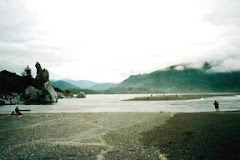
The Oregon-California border defines the Upper and Lower Basins which, for water management purposes, were for many years treated as if they were two rather than one river basin
Celebrating Victory
On March 29th the Upper Basin’s Herald and News reported on a celebratory meeting of the Klamath Water Users Association (KWUA) – the organization which represents Upper Basin interests receiving irrigation and landscaping water from the US Bureau of Reclamation’s Klamath Irrigation Project. Those water users – including those who own or lease 200,000 acres of farms and ranches, a golf and country club, hunting lodge and wood products plant – annually consume about 40% of the total water diverted from the Klamath River and major tributaries. Because they receive subsidized water and other advantages over non-federal water diverters, KlamBlog refers to these federal water users as the Irrigation Elite.
At their late March annual meeting, the Irrigation Elite feted Jason Phillips, Bureau of Reclamation (BOR) Klamath Project manager, and Irma Lagomarcino, the National Marine Fisheries Service (NMFS) manager responsible for the protection and recovery of Klamath River Coho Salmon. Klamath River Coho are listed as “threatened” under the California and federal Endangered Species Acts.
Speakers at the event praised the two Interior Department employees for prioritizing filling Upper Klamath Lake which – in spite of low inflows in this drought year – has already been filled even before the snowmelt season begins. Doing that required Phillips and Lagomarcino to agree to cut winter flows in the Klamath River below what is required in the 2010 Biological Opinion for Klamath Coho.
Getting federal managers to prioritizing filling Klamath Lake over all other fall/winter water uses has been a priority for the Irrigation Elite and another organization they dominate – the Klamath County Chamber of Commerce. In its 2011 annual report, KWUA President Gary Wright acknowledged that the Irrigation Elite organized a campaign to pressure Philips and Lagomarcino to prioritize irrigation needs over the needs of fish and wildlife:
“That work started last fall as we pushed hard to prevent excessive releases (from Upper Klamath Lake) in order to fill Upper Klamath Lake through the winter months. We received great cooperation from Jason Phillips and Bureau of Reclamation (Reclamation) and appreciate their efforts.”