Thursday, February 24, 2011

Klamath Update and Late Breaking News Special

We’ve been unable to post for a while and a lot has happened in Klamath Country. This post is an update on several of those happenings – some of which you may not have noticed. As usual, KlamBlog attempts to untwists the knots and debunk the spin. We include links so that you can find out more about things which some Basin "interests" are at pains to render opaque.

California Fish & Game Commission punts on Klamath River sport fishing regulations

You’ve probably heard about the Upper Klamath-Trinity Chinook Salmon ESA petition filed recently by EPIC and several other organizations. But did you know that – in spite of the petition – the California Fish and Game Commission recently proposed allowing sport fishermen to take wild Spring Chinook Salmon in the Lower Klamath and in the Trinity River above the South Fork?

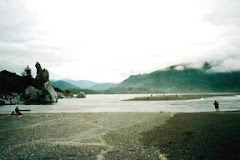
 Sport fishers line the banks where the Klamath River meets the Pacific

Wild Springers are the weakest salmon stock on the Klamath and are at high risk for extinction. The Commission could act to preclude a Springer listing by closing the ocean, Lower Klamath and the Trinity below Canyon Creek to sport fishing during the Spring Chinook run. That would reduce take of wild Springers while allowing anglers to catch and take Spring Chinook that come from hatcheries.

The Klamath Forest Alliance and others have been asking the Commission for years to limit sport fishing take of Spring Chinook. The Commissioners, however, have been unwilling to limit sport fishing to save and restore wild Springers.

Klamath wild Springers are the stock most appropriate for restoration to the Upper Klamath once the dams come down. The Commission’s narrow focus on keeping guides and fishermen on Klamath water threatens restoration and is a major reason a decision to list the Klamath-Trinity Spring Chinook pursuant to the ESA is likely.

Klamath flows cut in favor of irrigation. Federal  and other "managers" deny water to the Klamath; PacifiCorp goes along...for now.

Flows in the Klamath River have been cut drastically by federal bureaucrats. Their objective is to fill Upper Klamath Lake in order to maximize irrigation water deliveries this summer.  But you would not have known that was the case unless you read the Two Rivers Tribune out of Willow Creek. The responsible federal agencies – the Bureau of Reclamation, US Fish and Wildlife Service and National Marine Fisheries Service- have not acknowledged that they have cut Klamath River flows from what is required by the Endangered Species Act. Instead they’ve issued press releases bragging about release of a 12-hour pulse flow which they say will reduce salmon disease below the dams. Not one but two seasoned Klamath River reporters bought the hype and failed to recognize that the feds are actually cutting Klamath salmon flows.

Tribune reporters, however, did not just rewrite the feds press releases but rather picked up the phone and checked with Allie Hostler at the Hoopa Tribe. Hostler pointed out that - according to government forecasts - this is an above average water year in the Klamath Basin. That means spring flows should be between 2400 and 3100 cubic feet per second (cfs) instead of the 1300-1500 cfs which federal agencies are currently releasing.  As they did last year the federal bureaucrats are conspiring to manipulate water year types in order to maximize irrigation water deliveries.

The feds cutting flows to maximize irrigation deliveries could also further delay removal of four of PacifiCorp’s five Klamath River dams. PacifiCorp reminded its fellow deal makers recently that the KHSA Dam Deal allows them to further delay dam removal beyond 2020 if they don’t get the water they want to make power until then – a situation they complained was taking place this spring. After a closed door meeting, however, PacifiCorp announced that "a (flow) plan" had been developed with the feds and other KHSA promoters which "balanced the needs of energy customers, farmers, fish and the environment, showing the effectiveness of the Klamath Hydroelectric Settlement Agreement signed last year."

PacifiCorp subsequently dropped its complaint. The deal the company negotiated on Klamath flows in that closed door meeting has not been released by federal river managers.

If you think clearly about how the feds are managing Klamath River water in the deal-making era, you are likely to come to the same conclusion as KlamBlog: the KHSA Dam Deal and the KBRA Water Deal are NOT in the interest of the Klamath River or its wild salmon. To make matters worse, control of the Klamath River by federal agencies which favor irrigation over salmon is now being supported by those who once challenged the feds when it shortchanged salmon and the River.

The Karuk Tribe’s Craig Tucker, for example, praised the 12-hour pulse flow while failing to mention that salmon are being short changed over the course of the entire spring season! The Karuk Tribe is among those who have received federal funding as part of the payoff for signing the Dam and Water Deals.      

Will McClintock kill the KBRA and KHSA?

Judging from their press statements, anti-dam removal folks appear more confident that they can scuttle the Dam and Water Deals and thereby prevent dam removal.  Cause for the new optimism is the Republican take-over in the House of Representatives. Key Committees which must approve the $1 billion plus Deals are now headed by anti-environmental Republicans. Idaho’s Doc Hastings is chair of the House Resources Committee and Northern California’s Tom McClintock chairs that committee’s subcommittee on water and power. McClintock is on record as opposed to dam removal and is no friend to tribal interests.

In light of huge federal and state deficits and the newfound power of anti-environmental House Republicans, legislation needed to implement and fund the Dam and Water Deals appears unlikely. That should prompt those who signed the Deals in the belief that they would be the quickest path to dam removal to re-evaluate their positions.

The Pacific Coast Federation of Fishermen’s Associations (PCFFA), for example, was once a true salmon champion. Now, however, PCFFA is blocking a legal challenge to the Klamath Coho Bi-Op because it supports the Deals. PCFFA should either abandon the Deals and again champion the true interests of Klamath Salmon or get out of the way and allow a legal challenge to the Coho Bi-Op to proceed.

The Coho Biological Opinion was issued soon after the Deals were signed. It is tailored to comply with the KBRA Water Deal and as a result shortchanges salmon. The Coho Bi-op is likely to fall to a competent legal challenge because it ignores key recommendations of the second National Research Council report on Klamath science. The Bi-Op is also vulnerable because it provides less water for salmon than the best science says is needed – except of course for that 12-hour pulse flow.  If a judge is shown how the federal agencies conspired this year and last year to manipulate water year type in order to cut salmon flows and provide more water to irrigators that judge is likely to throw out the Klamath Coho Bi-Op and order the feds to meet higher flows prescribed in the previous Biological Opinion.

Members of those tribes which support the Deals should also take a hard look at what is going down. Your leaders may be true salmon champions but they are being taken to the cleaners in these Deals. The grant payoffs create and sustain a few jobs which are not even always held by tribal members. Are those jobs and that funding worth the price which it is now clear the River and Klamath Salmon are bearing? 

Yet another Klamath Advocacy Group Forms

In recent years, there has been a proliferation of Klamath River Basin groups which are focused on water management issues. In the Scott River Valley a new group – Protect Our Waters – has joined Save our Shasta and Scott (SOSS) and the Siskiyou Farm Bureau in opposing efforts to end the dewatering of Scott River through unregulated stream diversions and groundwater pumping.

In the Upper Basin the newly formed Citizens Protecting Rural Oregon (CPRO) has formed to oppose efforts by Oregon-based Klamath Basin irrigation districts to have state courts issue a ruling stating that the irrigation districts have legal authority to contract with the federal government to carry out aspects of the KBRA Water Deal. CPRO claims that the irrigation districts are asking the court to grant them authority to negotiate away individual right held by the individual members of the district. According to CPRO that would violate individual water rights which they claim are property rights. 

Ironically, the same irrigation district leaders whom CPRO says want to deprive other irrigation district member of their property rights were granted a new trial in their effort to force the federal government to pay compensation for what they claim was a “taking” of property rights when the feds curtailed irrigation deliveries in 2001. The contradiction suggests that for the Irrigation Elite property rights principle plays second fiddle to the drive for profit and competitive advantage. KlamBlog invites these irrigation leaders to explain this apparent contradiction here on KlamBlog.

Late Breaking News - McClintock leads Republican House in cutting funding for Klamath dam removal studies

As we pointed out above, it has been evident since November that those who oppose the removal of four PacifiCorp Klamath River dams are counting on the Republican majority in the House of Representatives to kill the KHSA Dam Deal. Some – but not all - opponents of dam removal also want House Republicans to scuttle the KBRA Water Deal.

These hopes center on Tom McClintock – a California anti-tax Republican – who has been appointed to chair the Resource Sub-committee on Water and Power and is a member of the House Budget Committee. Last month, for example, the Siskiyou County Board of Supervisors sent a letter to McClintock requesting his help to defeat dam removal.

Breaking news today, confirms that McClintock has delivered; he was instrumental in stripping funding for dam removal studies from legislation to fund government operations and prevent a government shut-down which passed the House of Representatives this week.

Copco 1 Dam: PacifiCorp's Klamath River dams are old. Retrofitting them to comply with current law will render them uneconomical; they are an asset which PacifiCorp wants ratepayers and taxpayers to pay to remove.   
Oregon Senator Jeff Merkley condemned McClintock’s action and vowed to restore the funding. Merkley may be the only remaining champion Klamath deal-makers can still count on. The bill - which now goes to the Senate - is for the 2011 fiscal year which began last September. It does not affect the 2012 fiscal year budget which is also being developed in Congress. All money measures must originate in the House. To become law, however, funding bills must also pass the Senate and be signed by the president.

Both the KHSA Dam Deal and the KBRA Water Deal require federal legislation. Without the legislation, key parts of the Deals – including removing PacifiCorp from responsibility for toxic legacies which may be lurking around its Klamath powerhouses and granting the Irrigation Elite millions of dollars in subsidies - cannot be implemented. 

Contrary to what most dam removal opponents think, however, the end of the KHSA Dam Deal will not prevent dam removal. The removal effort will simply shift back to the FERC process where KlamBlog thinks it should have remained all along. Moving back to FERC will likely get the dams out sooner than under the KHSA.

It is in the interest of PacifiCorp’s shareholders that the dams come out. In the final analysis PacifiCorp owns the dams and if the owner does not want them they will come down. Dam removal via the FERC process will be quicker and cheaper for several reasons; prime among these is the fact that neither a settlement nor a final ruling in the FERC process can be loaded down with all those unrelated KBRA Water Deal subsidies to the Irrigation Elite and others.

So the dams will come down. The one thing that could prevent removal is if some entity steps up to take over ownership and operation of the Klamath Hydroelectric Project. Maybe the Siskiyou County Supervisors are interested; they already own one power dam – albeit a small one. Or the Irrigation Elite could take them over.

Don’t hold your breath on either the Siskiyou Sups or the Irrigation Elite putting their money where their mouths are. That’s because - with new requirements for fish passage and flows between powerhouses already ordered in the FERC process - the Klamath Hydroelectric Project is a money looser.  A hydroelectric generating project that cannot make money will not survive; all the shouting, posturing, protestations, political finagling and litigating in the world can not change that reality. These are private dams operated for profit; the only question to be answered is who will bear the cost of removal – taxpayers, ratepayers or PacifiCorp shareholders?      

Monday, January 31, 2011

The Boldt Decision - Salmon and tribal fishing rights

By now most of those who are involved with or reporting on Klamath Salmon issues know at least the basic outline of the Klamath River Salmon Wars of the 1970s. If you don't know that history, the best retelling available was written by legendary Klamath Biologist Ronnie Pierce and is available on-line for download. The war - real guns were fired on all sides and armed federal marshals were deployed - raised such a stir that it was reported at length in Sports Illustrated.

Yurok fishers take salmon by drift net at the Klamath River's mouth


But you may not know that the Klamath Salmon War was part of a larger struggle of Indigenous Northwest and California Native peoples to preserve their rights to fish for salmon as they had done for time immemorial. In the 1970s state fish and wildlife departments - supported by the federal government -  moved to terminate and wipe out all vestiges of traditional Indigenous salmon fishing. At the time no one thought that the rag-tag groups of Native fishermen would prevail...including most of the fishermen themselves and their families. They had forgotten or had never known the words of anthropologist Margaret Mead:
          Never doubt that a small group of thoughtful, committed citizens can change the world. Indeed, it is the only thing that ever has.

The struggle over salmon fishing spawned hatred, violence and major federal court cases. The Indigenous Natives prevailed and the main resulting court decision - the Boldt Decision - has governed the allocation of salmon among Native, sport and commercial salmon fishers ever since. The Boldt Decision, for example, was the basis for the decision by Interior Secretary Bruce Babbitt to allocate 50% of the allowable Klamath River salmon catch to the Yurok and Hoopa Tribes. Ironically, other Klamath River Indians who also depend on salmon - including Yurok members of the Resighini Rancheria and Karuk members of the Karuk Tribe and Quartz Valley Tribe - do not have government recognized fishing rights. These folks must still fish at night and risk prosecution to exercise their aboriginal right to fish for salmon in a traditional manner.

My guess is that most of those involved in Klamath River and Klamath Salmon issues these days do not know the history of the Boldt Decision. So KlamBlog offers the article below from the February 7, 1999 issue of the Seattle Times newspaper.

Those who understand history and its patterns have an advantage navigating the present. This is particularly true for those who are involved in political movements and social controversies. We have that now on the Klamath. While the political and social struggles still center on salmon, the antagonists now are those who seek to control Klamath River water and its management as well as those who own dams and those who seek to remove them.

Learn the history, it will help you find the right road today.

Thursday, January 27, 2011

Coordination, Consultation and Co-management: Behind the scenes maneuvering in the Klamath River Basin

While the public government processes which will lead to the removal of four of PacifiCorp’s five Klamath River dams grind on, public and closed door preparations to derail dam removal are also progressing. A glimpse into behind the scenes efforts in Siskiyou County to defeat the Dam Deal surfaced last week.

At the January 18th Siskiyou County Board of Supervisors meeting, former school superintendent Frank Tallerico told the supervisors that his group - the Siskiyou County Water Users Association (SCWUA)  - wants the county to contribute $40,000 toward its lawsuit challenging the proposed Klamath Basin Restoration Agreement – the KBRA or Klamath Water Deal.

the KHSA or Klamath Dam Deal is not functionally related to the costly and controversial Klamath Basin Restoration Agreement - the Water Deal. Nevertheless, the KBRA has been politically joined to the KHSA in an attempt by federal agencies and other interests to tie their agendas to the dam removal train.  Dam removal is likely because PacifiCorp and its powerful chief shareholder Warren Buffet recognize that the Klamath Dam Deal they negotiated is in the company’s – and the shareholders – financial interest. In fact, the Dam Deal is sweet indeed for PacifiCorp since it relieves the company for all responsibility (and liability) for toxic legacies which may be lurking around powerhouses up to 100 years old.

The KBRA Water Deal is supported by powerful Upper Klamath Basin growers who control the Tule Lake Irrigation District. This Irrigation Elite got all they asked for in KBRA negotiations and now seek to consolidate those gains. Among numerous other efforts, Tulelake and the other Klamath Project irrigation districts are seeking declarations from California and Oregon courts that their actions in adopting the KBRA were lawful.

Upper Basin canals and pumps: The Irrigation Elite receive taxpayer subsidized water courtesy of the federal Bureau of Reclamation's Klamath Project

The desire of the Upper Basin’s irrigation elite to firm up gains made through the KBRA Water Deal is understandable. The Deal puts them first in line for Klamath River water ahead of salmon and the health of the River itself. If the Deal holds, this will make the Irrigation Elite the Basin’s chief water brokers. Putting irrigators first in line for water ahead of fish and refuges animates much of the environmental and tribal opposition to the Klamath Water Deal.

There were signs at the January 18th Siskiyou County Board of Supervisors meeting that the powerful Tulelake irrigators have the ear of most supervisors. As reported in the Siskiyou Daily News, county counsel Thomas Guarino told the supervisors that the SCWUA lawsuit “may not fit into the county’s overall litigation strategy with respect to the Klamath agreements and county finances.” Putting two and two together, KlamBlog suspects that the county’s “strategy” is to allow the KBRA to move forward - on behalf of the irrigation elite - while attempting to scuttle removal of the four PacifiCorp dams. 

Tallerico came away from the meeting empty handed.  His group (SCWUA) mostly represents water users in the Shasta and Scott Valleys. The irrigation elite are based in the Tulelake and Lower Klamath areas. All are in sprawling Siskiyou County. 

Monday, January 10, 2011

Salmon and River Activists ask Governor Brown to change direction in the Klamath River Basin

Seventeen Salmon and River Activists have released a letter they've written to newly elected California Governor Jerry Brown asking him to review and change California Department of Fish & Game policy and direction in the Klamath River Basin. Below is their press release and a copy of the letter.

________________________


For Immediate Release

Northern California River Activists write to Governor Brown:
Review of Department of Fish & Game Klamath Policies Requested

Today seventeen salmon and clean water advocates delivered a letter to California Governor Jerry Brown requesting that he review policies and approaches which the California Department of Fish & Game (DFG) and the Schwarzenegger Administration have pursued in the Klamath River Basin. The activists singled out two areas where they say DFG and the previous administration have pursued policies which are “not in the best interest of the Klamath River, its salmon and its people” –

•    In the Scott and Shasta Sub-basins the Department has sought to permit agricultural operations under the California ESA which cumulatively dewater these key salmon rivers and place Coho salmon and other culturally important species at extreme risk of extinction. Last year only 8 Coho returned to the Shasta River…all were males.

•    In the main Klamath, the Department is supporting a flow regime for salmon which will require public purchase of water from private interests during drought years. With climate change a growing reality, droughts could come to the Upper Klamath as often as every five years. How long will taxpayers be able to foot the bill to keep Klamath salmon alive? Federal and state budgets cannot sustain these expenditures.
According to the letter, these policies and actions stem from a more fundamental failing:

“The Department has failed to be a champion for the Public Trust Doctrine, to enforce those portions of the Fish & Game Code which implement the doctrine and to use it to guide its policies and actions with respect to critical Klamath River Basin issues.”

While the activists praised the work of individual DFG wardens and biologists, they claim the State of California needs to change course. The activists want Governor Brown to order DFG and the State Water Board to identify “flows needed in the Shasta, Scott and Mainstem Klamath which are needed in order for salmon stocks to recover.

_________________________________

Here's the letter sent to Governor Brown:

North Coast and Klamath Environmental Activists
c/o Felice Pace
28 Maple Road
Klamath, CA 95548

January 7, 2011

Dear Governor Brown,

We write to you as a group of individual, independent, grassroots environmental activists on a matter of urgent concern. We believe the course which California Department of Fish & Game continues to follow in the Klamath River Basin is – in two critical respects - not in the best interests of the Klamath River, its salmon and its people, nor in the best interest of the people of California. As you begin your administration, we urge you to review the policies and approaches we identify below and to consider changes. We believe there are solutions to the problems on the Klamath and we pledge our willingness to work with you and the Department to identify and implement durable solutions.

•    In the Scott and Shasta Sub-basins the Department has sought to permit agricultural operations under the California ESA which cumulatively dewater these key salmon rivers and place Coho salmon and other culturally important species at extreme risk of extinction. Last year only 8 Coho returned to the Shasta River…all were males.  The State of California needs to change course on these tributaries; it should begin by identifying flows needed in the Shasta and Scott to protect and restore salmon and by including all North Coast and Klamath streams with impaired flows in the State Policy to Maintain Flows in Northern California Rivers.

•    In the main Klamath, the Department is supporting a flow regime for salmon which will require public purchase of water from private interests during drought years. With climate change a growing reality, droughts could come to the Upper Klamath as often as every five years. How long will taxpayers be able to foot the bill to keep Klamath salmon alive? Federal and state budgets cannot sustain these expenditures.

Both these problems stem from a more fundamental failure of the Department of Fish & Game in Klamath Country: The Department has failed to be a champion for the Public Trust Doctrine, to enforce those portions of the Fish & Game Code which implement the doctrine and to use it to guide its policies and actions with respect to critical Klamath River Basin issues.

Not everything the Department has done in the Klamath River Basin is bad policy or ineffective.  Over the years and to this day there are dedicated individuals and teams doing solid professional work in Klamath Country. But when it comes to water policy, some restoration practices and, especially, the agricultural use of water – the Department has substantially failed to perform its duty to protect Public Trust Resources for the benefit of all Californians.  The Department’s Klamath policies have been rejected by significant elements within the environmental and agricultural communities. This is a clear sign that it is headed in the wrong direction.

We think there are better approaches at hand and we would like to work with you and your staff to get the State on the right course in the Klamath.  

Sincerely,

Richard Alves

Diane Fairchild Beck
  
Eileen Cooper

Robert Franklin

Don Gillespie

Gregg J. Gold, Ph.D.

Kyle Haines

Alan Levine

Daniel Myers

James Moore Jr.

Felice Pace

Jon Spitz

John M. Sully

Ronald W. Thompson
  
Donna M. Thompson

Michael Warburton

Wendell Wood