.JPG)
Digging Deeper
I
see the white paper as an accurate expression of dominant beliefs and
positions shared by most members of the Scott Valley's agricultural
community. For those interested in learning more about Scott Valley society and politics and how they impact salmon and all beneficial uses of water, below I dig a deeper into what I believe are errors and intentional omissions contained in the Ag white paper.
The white paper uses public information on the size of the Scott River's adult Coho run and information on Coho out-migration from the Scott to argue that the Coho are not really in danger of extirpation from the Scott River Basin and that, even if they were in danger, the emergency flows called for by DFW and being ordered by the State Water Board are not needed in summer because there are no Coho in Scott River at that time.
In making those assertions the white paper's authors ignore the following relevant factors:
#1 Coho Population Size
500 spawning adults is considered the absolute minimum population of a salmon stock needed to maintain sufficient genetic diversity within that stock or population group. Because not all migrating adults get to spawn, a run size significantly in excess of 500 individuals is needed to assure that at least 500 adults get to reproduce. Reduced genetic diversity means reduced resilience and increased risk of extirpation/extinction.
As noted in the white paper, in the Scott River Basin "average coho run size since 2007 is now 732 adults." Since not all migrating adults are able to spawn, 732 migrating adults is dangerously close to the 500 minimum spawning adults scientists believe are needed to maintain genetic diversity. Significant loss of genetic diversity vastly increases the chances that a fish or wildlife species or population will go extinct. But even before a critical threshold is reached, fewer spawners means reduced genetic diversity and increased vulnerability to changing environmental conditions.
A low genetic population combined with significant year to year variability in the number of spawners and now three rather than just two "weak" Coho "cohorts" is not the robust Coho population that the white paper's authors claim. The threat of extirpation from the Scott, which would be the extinction of the Scott River Coho, is not some risk manufactured in order to punish Scott Valley irrigators; it is, rather, a clear and present danger well documented by scientific experts. What is it about those experts that the three authors question? It can only be either their competence or their integrity.
#2 Where Coho Are Found
The authors claim that the emergency flows are not needed during the irrigation season because "CDFW’s annual salmon reports clearly show that coho do not occupy the mainstem of the river during July through early October." The authors fail to mention that the reason there are no Coho in the River during summer and early fall is that conditions there are rendered lethal to salmon and most other fish.
Removal of stream shade in order to maximize agricultural production in Scott Valley is one reason Scott River becomes too hot for salmon during the summer and early fall. Coho, and Chinook and Steelhead as well, flee into those cold tributaries which flow from wilderness and are not dewatered by irrigation diversions before they reach Scott River.

A stream's water temperature is also flow related: more flow
means lower stream temperature and less flow means higher stream
temperature. The dewatering of the Scott
via irrigation and stockwatering are another reason the Scott River below
Scott Valley is too hot for Coho and almost every other fish species to
survive. If you doubt this just swim the Scott River below Scott Valley in August. I've done it and seen an eerie underwater wasteland devoid of all salmon and most other fishes.
According to the Clean Water Act as expressed in the North Coast Regional Basin Plan, Scott Valley Ag folks are supposed to maintain natural shade along streams that pass through the land they control so that stream water temperatures remain cool. Most Scott Valley Ag operators ignore this legal requirement. They plow and plant right down to the streambanks or allow their livestock to trample the banks, thereby removing shade vegetation which allows the water to grow hot while adding sediment that fills pools and renders spawning gravel unusable.
The photo below shows plowing this spring right up to the streambank break along Moffett Creek in Scott Valley and the photo below that is of a feed lot located along lower Kidder Creek where a group of bulls is allowed to continually trample several hundred feet of streambank.
.JPG)
.JPG)
The reason there are no Coho in Scott River below Scott
Valley in summer is because the irresponsible Ag operators whose actions
the white paper defends decrease flows
and increase the river's temperature to the point where Coho can't
survive in the River in and below Scott Valley and must flee to the
free-flowing tributaries.
#3 The Ag Safety Net is Ironclad
The white paper's authors claim that maintaining the emergency flows for Coho threatens to put farmers and ranchers out of business. It is a false claim for several reasons, below are two:
1. Since 1977 almost all agricultural operations and operators in the Scott Valley have
developed the ability to irrigate with groundwater. Many of those
irrigation wells and center pivot irrigation
systems were paid for by federal taxpayers via the Klamath EQIP
Program. When surface water is not available, the irrigators just use
groundwater. This cuts into their profit margins but it is still
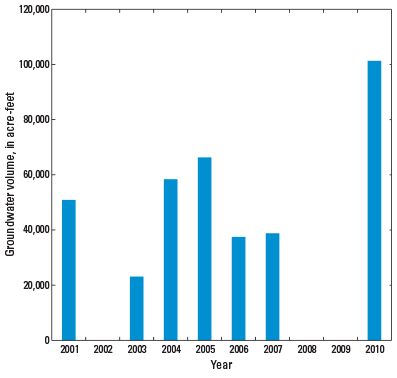
profitable to farm using groundwater for irrigation.The Water Board's emergency regulations allows for some use of groundwater for irrigation.
2. Some Scott Valley Ag producers receive taxpayer subsidies every year. In addition, whenever as a result of drought or other disasters Ag producers can't make a
profit, the federal government steps in with Disaster and Farm Bill Payments
to make those farmers and
ranchers whole. For example, from 1995 to 2019 Ag producers in the 96027 (Etna) zip
code (just one part of Scott Valley) received $6,010,299 in payments from the federal government (source: EWG Database).
Those payments are financed by taxpayers. Payments made every year are augmented regularly when a disaster is declared.
Ag producers have an excellent government safety net that guarantees their incomes. The safety net has many aspects, not just the two described above. For example, taxpayers pay part of the premium whenever an Ag operator decides to purchase crop insurance. I'm not against these income supports. It is just too bad that the poor and disadvantaged don't enjoy similar income support.
The levels of taxpayer support enjoyed by Scott Valley Ag producers individually and collectively are readily available from a public database at this link. The authors of the White Paper surely know about the ongoing crop, disaster and conservation payments because their family Ag businesses receive them. Why do you suppose they failed to mention them?
#4 Key Information Excluded and Ignored
The authors' use and misuse of selective information is evident to those familiar with the relevant scientific information. The omissions are reflected in the white paper's bibliography. The only document from the Karuk Tribe included is the Emergency Petition itself. The Karuk Tribe commissioned and paid for several scientific studies and assessments that are relevant to the status and recovery of Coho and Chinook Salmon in the Scott River Basin. Those studies are well known and readily available in several locations, including the Karuk Tribe's website. Why were the Karuk Tribe's Scott scientific studies and assessments omitted?
Denial of Reality Present and Past
Were these errors and omissions intentional or unintentional? Who knows and does it really matter? The fact is that the authors deny that Scott River Coho are at risk of extinction and totally ignore what experts have identified as the main risks to their continued existence. They also ignore what is called for in the Coho Recovery Plan.
The authors apparently believe that the need of Scott Valley ranchers and alfalfa growers to maximize profits trumps the needs of other species to survive. Why else would they publish such a mean spirited white paper which cherry picks the scientific information, failing to mention key facts that do not comport with their objective?
The white paper is one more confirmation that in the Scott River Valley we have a landed aristocracy which insists that their use of the land is the highest and best use; Coho and all else that depends on healthy stream ecosystems be damned.
This should not surprise us. The Scott River Basin's landed aristocracy got the land by expropriation, while eliminating its previous owners, the indigenous Shasta of Scott Valley. They continue to believe that they are entitled, not only to the land but also to the water.
While the degradation of the Scott River by agricultural operations has been a long term process, the details have changed over time. In the 1970s, Scott Valley native Jim Denny wrote an article chronicling the destruction he had seen up until that point. You can read Jim Denny's Death of a Lady at this link.
The Ag white paper demonstrates why we need to get rid of the Scott Valley Aristocracy. Aristocracies take care of themselves at the expense of all others, including less advantaged members of their own and other species. Aristocracies are antithetical to real democracy and, in the case of Scott Valley, to acknowledgement and redress for the historic genocide by which the Scott Valley aristocracy got "ownership" of the land and (until recently) control of the water.
We should not be surprised that the aristocracy is upset about losing control of the water. They refuse to take responsibility for the fact that it is their own greed, resulting in the dewatering of Scott River and the endangerment of Scott River Salmon, that created the current situation.
This is the way all aristocracies act and it is the main reason freedom loving folks came to the USA, that is, to escape aristocracy and its excesses. And that is why the Scott River Aristocracy should fall: it is not only unjust to the Scott River, its aquatic ecosystems and those who depend on them, it is not in keeping with American ideals.
What's Needed Now


.JPG)